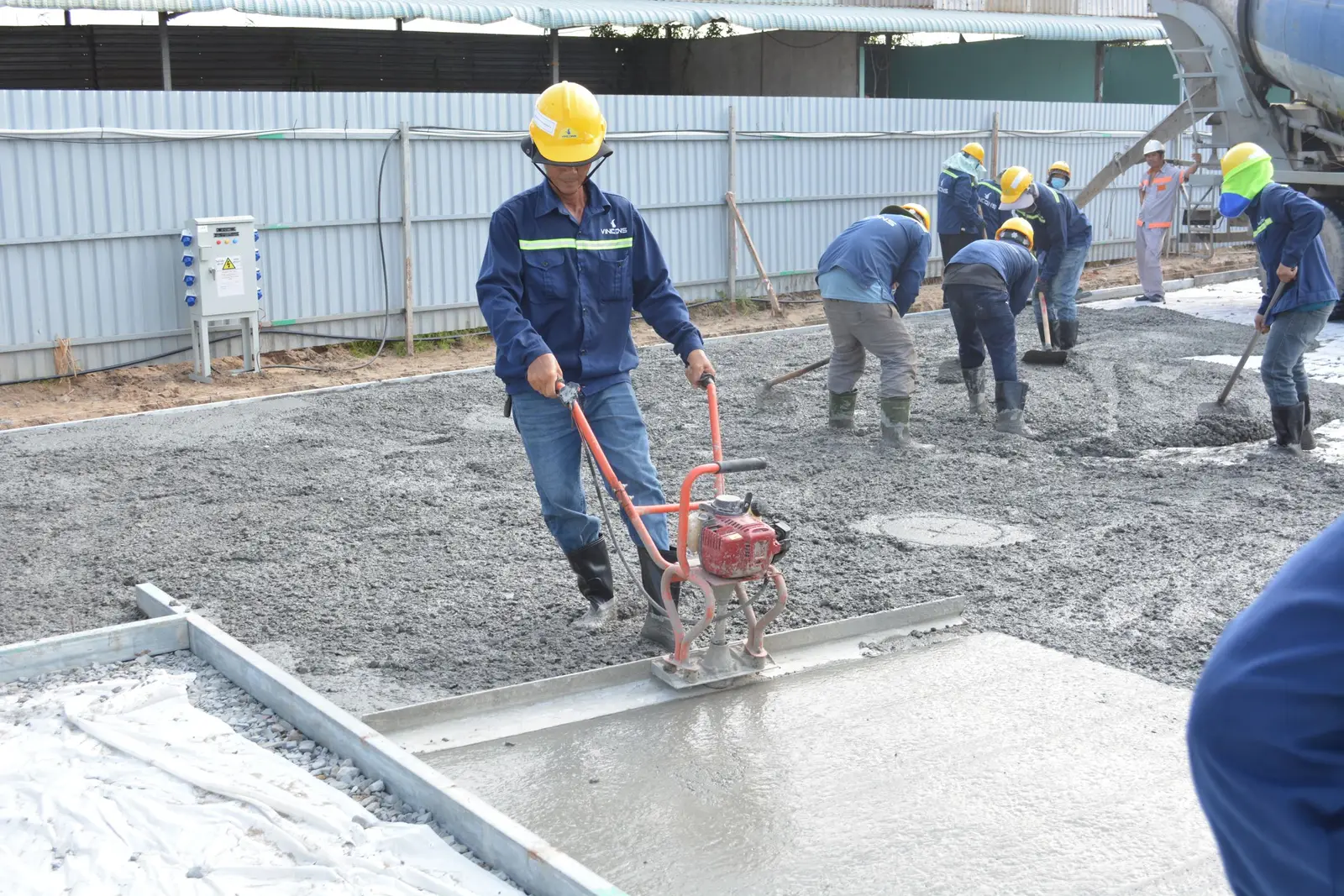
Why temperature matters for concrete
Concrete does not dry, it cures. Cement reacts with water and slowly hardens, and that reaction depends on temperature. When it is too hot, the water leaves the surface too fast, the top gets weak, and shrinkage cracks show up. When it is too cold, the reaction slows way down, and if fresh concrete freezes, the surface can flake and lose strength.
Mild weather gives the crew time to place and finish the slab, and gives the concrete a steady cure. That is why spring and fall pours tend to look and wear best.
Timing also affects the finish. Stamped and colored concrete is fussier than a plain broom slab, since the crew has a short window to imprint the pattern. In mild weather that window is comfortable. In July heat it can shrink fast, so many crews prefer to schedule decorative pours in spring and fall.
Season by season in Cedar Hill
Let's break it down by time of year.
- Spring (March to May): Great pouring weather, but this is storm season. Expect a few rain delays and a busy schedule.
- Summer (June to early September): Workable with early starts and hot-weather steps. Afternoon pours in July and August are hard on concrete.
- Fall (late September to November): Often the best window. Warm days, cooler nights, less rain, and calmer schedules.
- Winter (December to February): Plenty of mild days for pouring, with an eye on cold fronts and the odd hard freeze.
Pouring in summer heat
North Texas summers bring long stretches near or above 100 degrees. A good crew can still pour a strong concrete driveway in July. Here is how they handle it.
They start at first light so the slab is placed and finished before the worst heat. They dampen the base so dry ground does not pull water from the mix. Some use a retarder in the mix to slow the set and give finishers more time. Right after finishing, they apply a curing compound or keep the slab damp so the surface does not dry out too fast.
If you schedule a summer pour, expect an early start and do not be surprised if the crew asks to move a pour away from a forecast heat spike or high winds.
Pouring in cold weather
Cedar Hill does not see many deep freezes, but a blue norther can drop temperatures fast. The common rule is that fresh concrete should stay above freezing for at least the first couple of days. Crews watch the forecast closely in winter.
When it is cool, they may use warm water or an accelerator in the mix, avoid pouring on frozen or muddy ground, and cover the slab with insulating blankets overnight. If a hard freeze is coming within a day or two of a pour, the honest move is often to wait.
Next steps for a winter job: keep an eye on the ten-day forecast with your crew, and have a backup date in mind. A one or two day slide costs nothing and protects the slab.
Rain, wind, and wet ground
Temperature is not the only thing that matters. Here is what else a crew watches before a pour.
- Rain: Heavy rain on fresh concrete can pit the surface and weaken the top layer. Crews keep plastic on hand during storm season.
- Wind: Dry south winds in summer pull water out of the surface even faster than heat alone. Windbreaks and quick curing help.
- Wet ground: After a soaking spring storm, clay can be too soft to compact. Waiting a few days for the subgrade to firm up beats pouring on mud.
- Humidity: Low humidity speeds evaporation. A humid morning gives finishers a little more working time.
Cure times: when can you use it?
Concrete gains strength fast at first, then keeps hardening for weeks. Here is a plain timeline for a standard mix in mild weather. Cold weather stretches each step out.
- About 24 hours: Light foot traffic on a concrete patio or walk.
- About 3 days: Light patio furniture and normal foot traffic.
- About 7 days: Passenger cars on a new driveway in most cases.
- About 28 days: Close to full design strength. Hold off on heavy trucks, RVs, and trailers until then.
- After about 30 days: A good time to apply a penetrating or decorative sealer, unless your crew sealed it at the pour.
Aftercare and scheduling tips
What you do after the crew leaves matters too. Leave any curing compound or covering alone as directed. Keep cars, bikes, and heavy planters off the slab. Turn sprinkler heads so they do not hit a fresh patio on day one.
In hot weather, your crew may ask you to mist the slab lightly for a few days. Do it in the morning and evening. In its first winter, skip deicing salt on new concrete. Sand gives traction without harming the surface.
Book early for spring. Many homeowners wait for the first nice weekend, and calendars fill fast. Fall often has more openings and great weather, so it is worth considering for patios and concrete slabs that are not urgent. Plan around the rest of the yard. Pour concrete before new sod, irrigation, or a fence goes in so trucks and forms do not tear up the work. Keep kids, pets, and sprinklers off fresh concrete. If you have an HOA in Lake Ridge or a similar neighborhood, get approval before you lock in a date. Next steps: pick a target month, then request a free estimate or call (469) 402-4525. Our crew can tell you how far out the schedule runs and which days look best.
Common questions
What temperature is too hot to pour concrete?
There is no single cutoff, but pours get harder above about 90 degrees, especially with wind and low humidity. In a Cedar Hill summer, crews pour early in the morning and use curing steps to keep the slab from drying too fast.
Can you pour concrete in winter in Texas?
Yes. North Texas has plenty of mild winter days. Crews avoid frozen ground, watch for cold fronts, and cover fresh concrete with blankets if nights drop near freezing.
How long before I can park on a new driveway?
Most driveways can take passenger cars after about 7 days in mild weather. Wait closer to 28 days for heavy trucks, trailers, or RVs. Cold weather can stretch these times.
What happens if it rains right after a pour?
Light rain after the surface has set usually does little harm. Heavy rain on fresh, unset concrete can wash out the finish. Crews watch radar and cover slabs with plastic if a storm pops up.