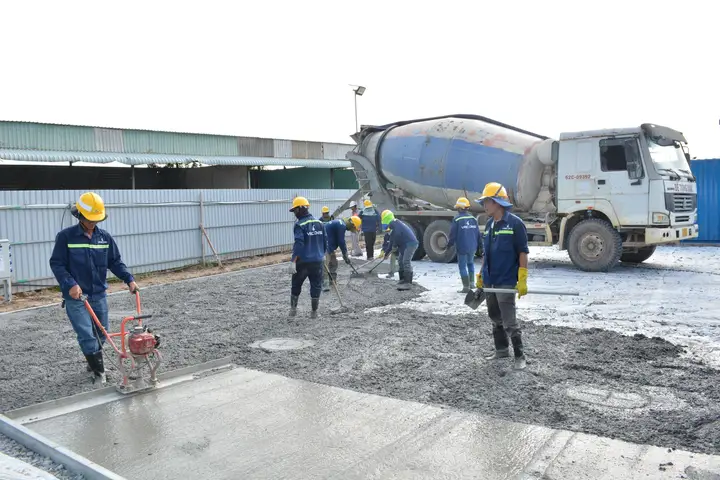
Our crew forms, reinforces, and pours foundations engineered for our expansive Blackland clay, where the soil moves with the seasons and the base prep decides whether the slab stays sound.
Slabs, additions, and outbuildings
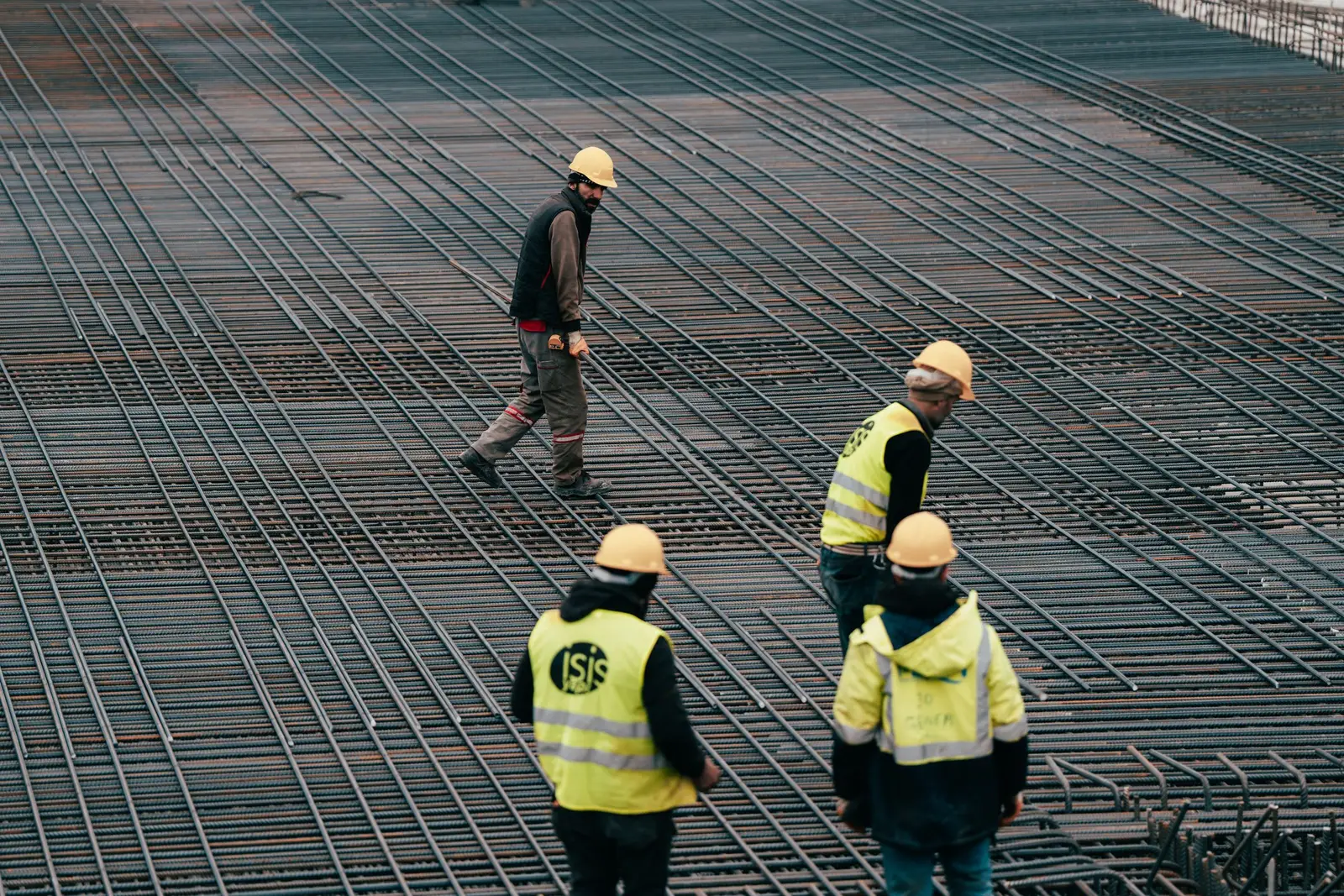
Most work here is residential slab-on-grade: the pad for an addition, a detached garage, a shop, or a storage building. Each starts with excavation, a compacted base, a vapor barrier, and a rebar grid sized to the load, then a monolithic or stem-wall pour depending on the structure.
Tying a new addition to an existing house is its own skill. The crew matches the new slab elevation to the home, dowels into the existing foundation where appropriate, and details the joint so the two move together instead of pulling apart.
Engineered for expansive clay
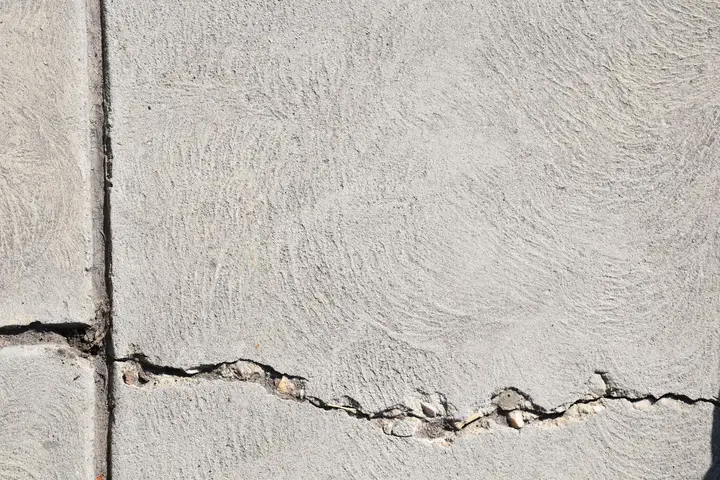
Blackland clay is the reason North Texas foundations get so much attention. It swells with moisture and shrinks in drought, and a slab that is not built for that movement will crack and tilt. The defenses are a properly moisture-conditioned and compacted base, adequate slab thickness, a correct rebar or post-tension layout, and thickened beams where the loads concentrate.
On Cedar Hill's escarpment lots, drainage is part of the foundation plan. Keeping water moving away from the slab and maintaining even moisture around it does as much for longevity as the concrete itself.
Working with your plans and engineer
For anything structural, our crew pours to the engineered drawings and the permit, not to a guess. If you have a slab design from a structural engineer, the crew builds to it. If you need one, they can point you toward getting the lot evaluated before the pour.
That discipline matters most on the foundation, because it is the one part of the project you cannot easily redo later. Getting the base, the steel, and the drainage right the first time is the whole job.
Moisture management around the slab
On Blackland clay, the single biggest favor you can do a foundation is keep the moisture around it even. Big wet-dry swings are what heave and crack a slab, so our crew pairs the pour with the drainage that protects it: positive grade away from the slab, gutters and downspouts carried well past the edge, and beds that do not trap water against the beam.
For additions and outbuildings, that means thinking past the concrete to where the roof water goes and how the new slab ties into the existing grade. Getting the water right is cheaper than any pier or repair later, and it is the part a crew that pours on this soil every week does not skip.
Timing helps too. Pouring a foundation when the soil moisture is reasonably stable, and keeping it that way through the cure, gives the slab the best start on ground that likes to move. A crew that works this clay plans the pour and the watering around that rather than fighting the weather after the fact.