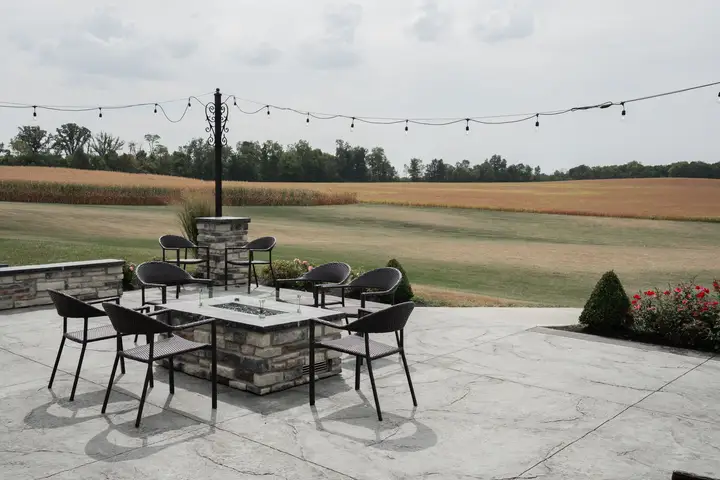
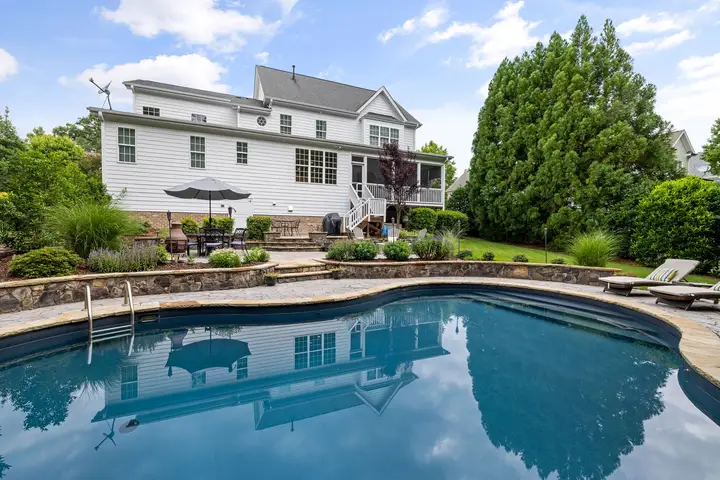
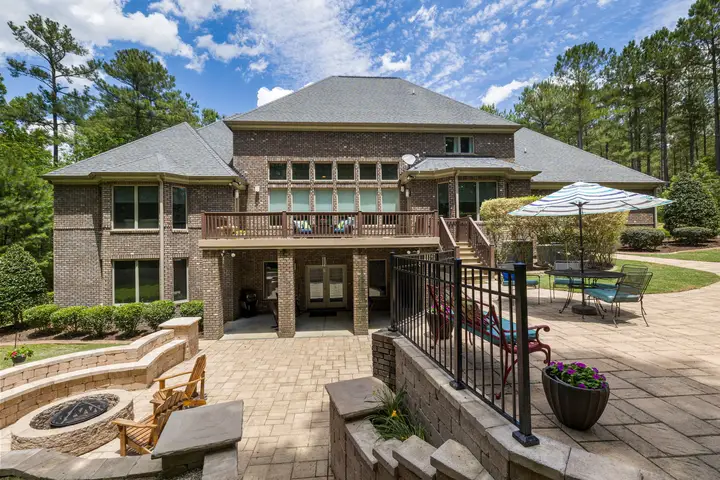
Our crew designs and pours patios sized to your yard and the view, from a simple broom-finished slab off the back door to a stamped, colored outdoor room with seating and a grill area. Built on a proper base, a concrete patio outlasts pavers and never shifts apart at the joints.
Patios designed around your yard
The best patio fits the house and the lot instead of being dropped in as a plain rectangle. Our crew looks at how you want to use the space, where the sun and shade fall through the day, and how the ground slopes, then lays out a slab that connects to the house and drains away from it.
Cedar Hill backyards often back up to greenbelts, the escarpment, or a slope down toward a creek or the lake. The patio is set so water runs off cleanly and the edge meets the grade without a drop-off, which keeps it safe and keeps soil from washing out underneath.

Finishes that fit the way you live outside
A broom finish is the practical baseline: grippy underfoot, easy to clean, and budget-friendly. Stamped concrete gives the look of flagstone, slate, or wood plank in one solid pour with no gaps for weeds. Exposed aggregate and salt finishes add texture and stay cooler and less slick around water.
Color is part of the design. Integral color, stains, and accent borders let the patio pick up the brick or stone on the house so it reads as part of the home, not an afterthought poured in the yard.
Why concrete beats pavers and wood here
Pavers look good on day one, but on our expansive clay they tend to settle unevenly, separate at the joints, and grow weeds between the stones. A reinforced concrete slab moves as one piece and stays flat. Wood decks weather, splinter, and need refinishing.
A concrete patio asks for little more than the occasional rinse and a reseal every few years. That low upkeep is a big reason Cedar Hill homeowners pick concrete for the spaces they use most.
Outdoor living that suits Cedar Hill yards
Cedar Hill's elevation and tree cover make backyards genuinely usable for much of the year, so a patio earns its keep. Our crew sizes the slab for how you actually entertain, leaving room for a table and chairs, a grill run, and a path to the gate, and shapes the edge to follow the yard instead of fighting it.
Shade and slope set the layout. Patios that catch the afternoon sun do well with a lighter color and a textured finish that stays cooler underfoot, while a patio stepping down a graded lot can be split into levels tied together with a step or a low seat wall. Each pour is jointed and drained so it stays flat and sheds water off the back of the property.
If you are weighing a patio against a deck, the math favors concrete on most Cedar Hill lots. There is no annual staining, no boards to replace, and nothing to wobble loose underfoot, just a rinse now and then and a reseal every few years on decorative finishes. Over the years you keep the house, that difference adds up.